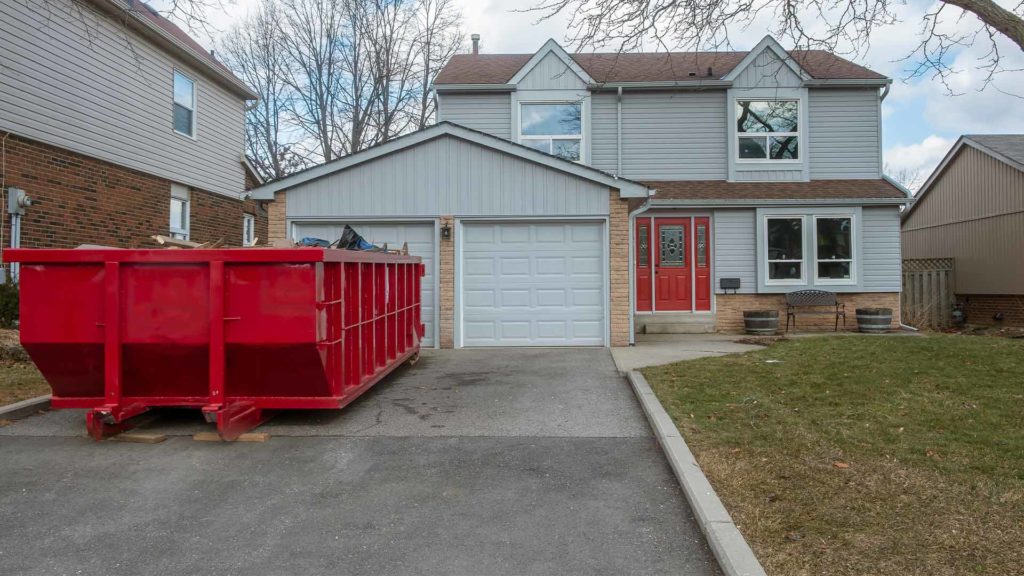
A roll-off dumpster is a large, open-top container used to collect and remove waste from short-term projects. It is delivered to your property, placed in an approved location, and picked up when the job is complete.
Roll-off dumpsters are common for home cleanouts, construction work, roofing projects, renovations, and commercial cleanups. Their open design makes it easy to load bulky debris, while different container sizes give you options based on the amount of waste your project creates.
What Is a Roll-Off Dumpster?
Roll-off dumpsters are designed for temporary waste removal. Unlike smaller trash containers that stay on-site for regular collection, a roll-off dumpster is delivered when you need it and removed after your rental period. Most roll-off dumpsters have an open top, which gives you easy access when loading large or heavy items. They also have wheels that allow the container to roll on and off the delivery truck.
Available capacities vary by provider. Reviewing available dumpster sizes before scheduling a rental can help you choose a container that matches your project. Smaller dumpsters often work well for household cleanouts and minor renovations. Larger containers are better suited for construction, demolition, roofing, and other projects that create more debris.
Roll-Off Dumpsters vs. Regular Dumpsters
Roll-off dumpsters and permanent dumpsters serve different waste removal needs. A roll-off dumpster is mainly used for temporary projects. It arrives at the start of the job and is removed when you are finished or when the container is full.
Permanent dumpsters, often called front-load dumpsters, are commonly used by restaurants, offices, apartment buildings, and other businesses. They stay at the property and are emptied on a regular pickup schedule. Roll-off dumpsters also tend to offer more room for bulky debris. Depending on the rental terms, they may be used for materials such as:
- Household junk
- Furniture
- Wood
- Drywall
- Roofing shingles
- Remodeling debris
- Construction materials
- Yard debris
Some materials may have weight limits or separate disposal rules. Always confirm what can go into your dumpster before you begin loading it.
How Roll-Off Dumpsters Are Delivered and Picked Up
Roll-off dumpsters are transported on specialized trucks. The truck uses a hydraulic system to lower the container onto a driveway, job site, or another approved area. Before delivery, the placement area should be clear of vehicles, equipment, low branches, and other obstacles. The truck also needs enough space to enter the property and safely position the container.
When the rental period ends, the truck returns and loads the dumpster for removal. The debris may then be taken to a landfill, recycling facility, or transfer station, depending on the material and local disposal process.
Some projects may also benefit from live loading. With live loading, the truck remains at the site while the customer loads the dumpster. The container is then removed during the same visit. This option can work well for locations where a dumpster cannot remain for an extended period.
Common Uses for Roll-Off Dumpsters
Roll-off dumpsters can support many types of residential, commercial, and construction projects.
Construction and Demolition
Contractors often use roll-off dumpsters to collect wood, drywall, shingles, packaging, and other job site debris. Keeping waste in one container can make the work area easier to manage and reduce the time spent hauling materials away. Demolition projects can create large amounts of debris in a short period. A roll-off dumpster provides a central location for that material throughout the job.
Home Renovations and Cleanouts
Homeowners may rent dumpsters for kitchen remodels, bathroom renovations, flooring removal, or larger home improvement projects.
They are also useful for:
- Garage cleanouts
- Basement cleanouts
- Attic cleanouts
- Moving
- Decluttering
- Estate cleanouts
Having a dumpster on-site gives you a place to dispose of unwanted items as you work instead of making repeated trips to a disposal facility.
Roofing Projects
Roof replacement can produce a large number of heavy debris, including shingles, underlayment, flashing, and damaged wood. Roll-off dumpsters are commonly used for roofing jobs because they can hold this material in one location while crews work. Weight limits are especially important for roofing debris, so the dumpster size should be selected with the material in mind.
Commercial and Property Cleanups
Property managers, business owners, and contractors may use roll-off dumpsters during office cleanouts, tenant turnovers, renovations, and property updates. They can also be useful for large event cleanup and landscaping projects that create more waste than standard trash service can handle.
How to Choose the Right Roll-Off Dumpster
The right dumpster depends on your project, debris, location, and timeline.
Project Size
Start by looking at the amount of work involved. A small cleanout may only require a compact container, while a major renovation or construction project may need more capacity. Choosing a dumpster that is too small can lead to extra pickups. A container that is much larger than needed may add unnecessary cost.
Type of Debris
Think about what you plan to throw away. Household junk is different from concrete, roofing shingles, or demolition debris. Heavy materials can reach a dumpster’s weight limit before the container is physically full. Tell the rental company what you are disposing of so they can recommend an appropriate option.
Rental Timeline
Consider how long the project will take and when the dumpster will be needed. Schedule delivery before major cleanup or demolition begins. Plan pickup for a time when the work is finished or the dumpster is expected to be full. Rental periods vary, so ask about the included time and any fees for keeping the dumpster longer.
Placement
Choose a level, accessible location that gives the delivery truck enough room to place and remove the container. Driveways are common placement areas for residential projects. Job sites may have more placement options, but access should remain clear. If you plan to place a dumpster on a public street or another public area, a local permit may be required. Homeowners should also check HOA rules before scheduling delivery.
What Cannot Go in a Roll-Off Dumpster?
Some materials cannot be placed in a standard roll-off dumpster because they require special handling or disposal.
Common restricted items may include:
- Asbestos
- Batteries
- Paints and solvents
- Chemicals
- Fuels
- Certain electronics
- Medical waste
- Other hazardous materials
Rules can vary based on the disposal facility and type of waste. Ask your rental provider about restricted materials before loading the container. Some accepted materials may also come with additional disposal fees because of weight, processing, or local facility charges. Confirm these details before your rental so you know what to expect.
Get Help Choosing a Roll-Off Dumpster
Choosing the right dumpster can make cleanup faster and help you avoid extra pickups, weight charges, or disposal problems. Reliable Roll-Off Solutions can help you compare sizes, review acceptable materials, plan delivery, and schedule pickup based on your project. Contact Reliable Roll-Off Solutions to discuss your waste removal needs and request a free quote.